If you're looking for a comprehensive GLP-1 drugs list, you're likely trying to understand how these medications compare, which brands are available, and what each one is approved to treat.
GLP-1 receptor agonists are a growing class of therapies used in type 2 diabetes and, for some agents, chronic weight management.
These medications mimic the natural hormone glucagon-like peptide-1 (GLP-1) to influence glucose regulation and appetite-related signaling.
Below is a clinically accurate overview of current FDA-approved GLP-1 receptor agonists in the United States, along with their delivery forms and labeled therapeutic uses.
What this article covers:
- What Are GLP-1 Drugs?
- GLP-1 Drugs Approved in the United States
- How GLP-1 Drugs Differ
- Quick Comparison Table
What Are GLP-1 Drugs?
GLP-1 drugs, formally called glucagon-like peptide-1 receptor agonists, are incretin-based therapies that activate the GLP-1 receptor.
The native GLP-1 hormone is released from intestinal L-cells after food intake and helps regulate glucose-dependent insulin secretion, glucagon suppression, gastric emptying, and satiety signaling.
GLP-1 receptor agonists are designed to resist rapid enzymatic degradation, thereby allowing sustained receptor activation. Most are injectable medications, although one oral formulation is currently available.
Some newer agents act not only on the GLP-1 receptor but also on additional targets, such as the glucose-dependent insulinotropic polypeptide (GIP) receptor.
These medications are primarily used in type 2 diabetes and, in certain formulations, chronic weight management.
If you'd like a deeper clinical overview, our resources on what is GLP-1 and what is GLP-1 medication provide further detail.

GLP-1 Drugs Approved in the United States
Below is the current list of major FDA-approved GLP-1 drugs in the United States, organized by active ingredient.
Semaglutide-Based Medications
Semaglutide is a modified GLP-1 analog designed for prolonged activity.
- Ozempic® (semaglutide): Once-weekly injectable; FDA-approved for improving glycemic control in adults with type 2 diabetes and for reducing the risk of major adverse cardiovascular events in certain adults with type 2 diabetes and established cardiovascular disease.
- Wegovy® (semaglutide): Once-weekly injectable; FDA-approved for chronic weight management in adults with obesity or overweight with at least one weight-related condition.
- RYBELSUS® (semaglutide): Once-daily oral tablet; FDA-approved for type 2 diabetes.
Although these medications contain the same active ingredient, their approved indications and dosing differ based on formulation and strength.
Tirzepatide (Dual GLP-1/GIP Receptor Agonist)
Tirzepatide is sometimes grouped with GLP-1 drugs, although mechanistically it is a dual agonist that activates both the GLP-1 and GIP receptors.
- Mounjaro® (tirzepatide): Once-weekly injectable; FDA-approved for type 2 diabetes.
- Zepbound® (tirzepatide): Once-weekly injectable; FDA-approved for chronic weight management in adults meeting specific criteria.
Because tirzepatide engages two incretin pathways, it is technically distinct from single-receptor GLP-1 receptor agonists, even though it is commonly discussed alongside them.
Liraglutide
Liraglutide is a daily injectable GLP-1 receptor agonist available in different doses for different indications.
- Victoza® (liraglutide): Once-daily injectable; FDA-approved for type 2 diabetes and for reducing cardiovascular risk in certain adults with type 2 diabetes and established cardiovascular disease.
- Saxenda® (liraglutide): Once-daily injectable; FDA-approved for chronic weight management.

Dulaglutide
Dulaglutide is a once-weekly GLP-1 receptor agonist.
- Trulicity® (dulaglutide): Once-weekly injectable; FDA-approved for type 2 diabetes and for reducing the risk of major adverse cardiovascular events in certain adults with type 2 diabetes and established cardiovascular disease.
Exenatide
Exenatide was one of the earliest GLP-1 receptor agonists approved in the United States.
- Byetta® (exenatide): Twice-daily injectable; FDA-approved for type 2 diabetes.
- Bydureon® and Bydureon® BCise® (exenatide extended-release): Once-weekly injectable; approved for type 2 diabetes, with some formulations phased out over time.
Lixisenatide
Lixisenatide is another GLP-1 receptor agonist with more limited current use in the United States. Lixisenatide was largely outcompeted by newer GLP-1s that offer stronger A1C and weight-loss results.
- Adlyxin® (lixisenatide): Once-daily injectable; previously FDA-approved for type 2 diabetes and less commonly marketed in recent years.
How GLP-1 Drugs Differ
Although they share a receptor target, GLP-1 medications differ in several clinically meaningful ways.
By Administration Route
Most GLP-1 receptor agonists are administered by subcutaneous injection because they are peptide-based molecules that would be degraded by digestive enzymes if taken orally.
Injectable products include Ozempic, Wegovy, Trulicity, Mounjaro, Zepbound, Victoza, Saxenda, and exenatide formulations.
Rybelsus is currently the only FDA-approved oral GLP-1 receptor agonist. It contains semaglutide combined with an absorption enhancer (SNAC) that facilitates uptake across the gastric mucosa when taken under specific fasting conditions.
Because oral bioavailability is lower and more variable than injectable formulations, administration timing and adherence to label instructions are clinically important.

By Frequency
GLP-1 receptor agonists vary in dosing frequency based on their molecular modifications and half-life.
Daily formulations include:
- Rybelsus (oral semaglutide)
- Saxenda (liraglutide)
- Victoza (liraglutide)
- Adlyxin (lixisenatide)
- Byetta (exenatide, twice daily)
Weekly formulations include:
- Ozempic (semaglutide)
- Wegovy (semaglutide)
- Trulicity (dulaglutide)
- Mounjaro (tirzepatide)
- Zepbound (tirzepatide)
- Bydureon (extended-release exenatide)
Longer-acting agents achieve sustained receptor activation through structural modifications such as albumin binding or Fc-fragment fusion, which extend half-life and allow once-weekly dosing.
Shorter-acting agents may exert more pronounced effects on postprandial glucose through transient gastric emptying delay, while longer-acting agents may provide steadier effects on fasting and overall glycemic patterns.
By Primary Use
FDA-approved indications are product-specific and based on clinical trial data for each formulation and dose.
Primarily indicated for type 2 diabetes:
- Ozempic
- Rybelsus
- Trulicity
- Victoza
- Byetta
- Bydureon
- Adlyxin
Primarily indicated for chronic weight management:
- Wegovy
- Saxenda
- Zepbound
Some active ingredients, such as semaglutide and tirzepatide, are available in separate branded formulations that carry different FDA-approved indications. The distinction reflects differences in studied populations and regulatory approval pathways.
It is important to separate the class mechanism from labeled indication. While medications may share GLP-1 receptor activity, FDA approval applies to specific products and patient populations studied in clinical trials.
Cardiovascular risk-reduction indications, for example, are based on dedicated outcomes trials for certain agents rather than assumed as a universal class effect.

Quick Comparison Table
The table below summarizes the major GLP-1 receptor agonists currently approved in the United States, including active ingredient, common brand names, delivery method, and labeled indications.
|
Active Ingredient |
Common Brand Names |
Delivery |
Typical FDA-Approved Use |
|
Semaglutide |
Ozempic, Wegovy, Rybelsus |
Weekly injection or daily oral |
Type 2 diabetes (Ozempic, Rybelsus); chronic weight management (Wegovy); cardiovascular risk reduction in certain adults with T2D (Ozempic) |
|
Tirzepatide |
Mounjaro, Zepbound |
Weekly injection |
Type 2 diabetes (Mounjaro); chronic weight management (Zepbound) |
|
Liraglutide |
Victoza, Saxenda |
Daily injection |
Type 2 diabetes and CV risk reduction in certain adults (Victoza); chronic weight management (Saxenda) |
|
Dulaglutide |
Trulicity |
Weekly injection |
Type 2 diabetes; cardiovascular risk reduction in certain adults with T2D |
|
Exenatide |
Byetta, Bydureon |
Daily or weekly injection |
Type 2 diabetes |
|
Lixisenatide |
Adlyxin |
Daily injection |
Type 2 diabetes; limited current marketing in the U.S. |
Conclusion
This GLP-1 drug list includes a range of incretin-based medications used in type 2 diabetes and, for certain formulations, chronic weight management. These therapies differ by active ingredient, delivery method, dosing frequency, and FDA-approved indication.
Treatment selection is individualized and based on medical history, therapeutic goals, tolerability, and provider guidance.
For individuals using GLP-1 receptor agonists, appetite changes and smaller meal volumes can make nutrition consistency harder to sustain over time.
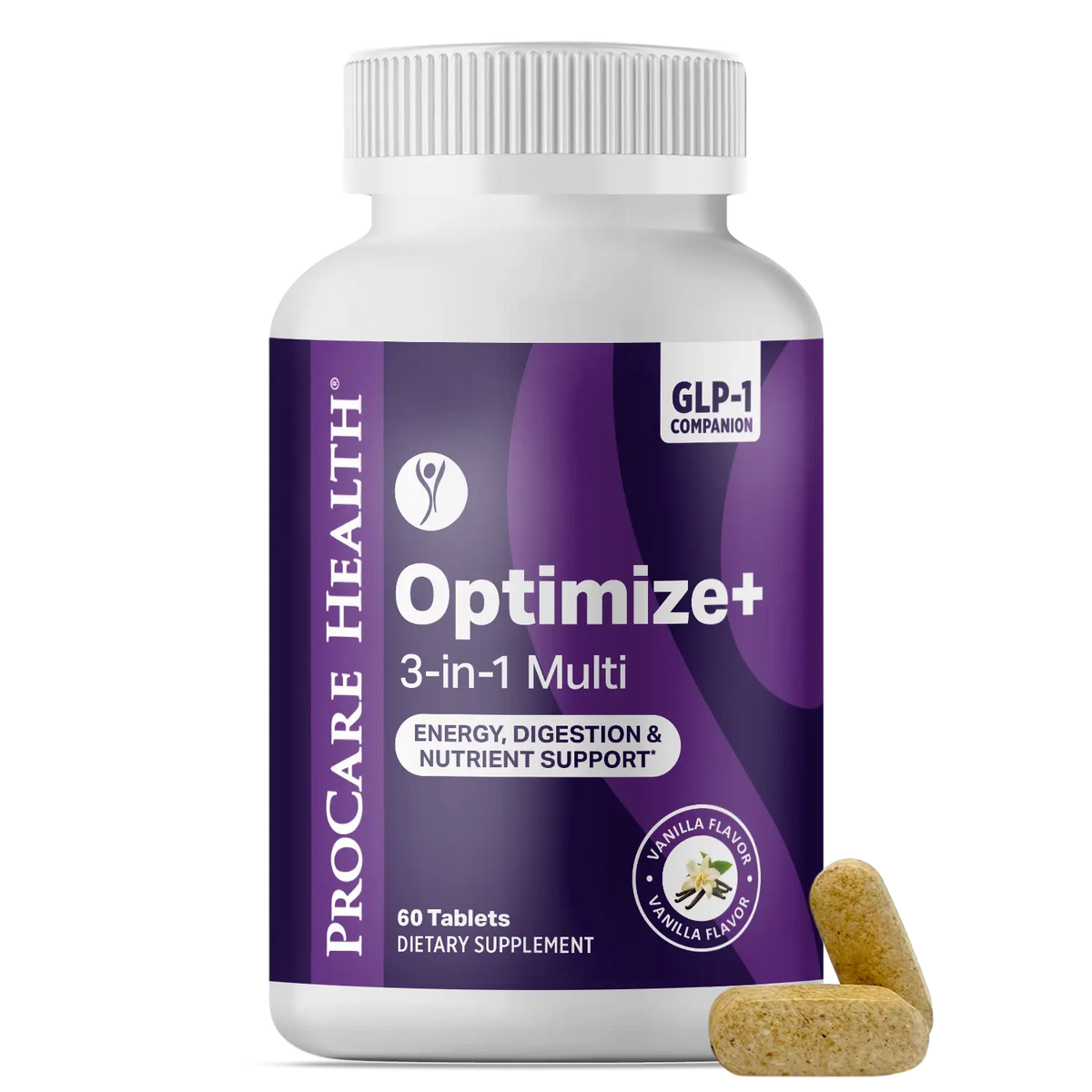
ProCare Health offers targeted options, including GLP1 support supplements and a GLP-1 companion, that fit into provider-guided nutrition routines and are designed to support consistent micronutrient intake as appetite patterns change.
Educational Disclaimer
This content is provided for educational and informational purposes only and is not intended to diagnose, treat, cure, or prevent any disease. The information shared is not a substitute for professional medical advice, diagnosis, or treatment.
Individual responses to nutrition, lifestyle changes, bariatric surgery, and GLP-1 therapies can vary. Decisions regarding medications, supplements, or changes to diet and physical activity should be made in consultation with a qualified healthcare provider who is familiar with your individual medical history and health needs.
ProCare Health products are not intended to replace prescription medications or medical care. Always consult your healthcare provider before starting, stopping, or changing any medication or supplement regimen.
Curious to learn more about metabolic health? Check out these articles: